Why Proper HVAC Sizing and Installation Matter for Pasadena-Area Homes
If you live in or around Pasadena, you do not need a chart to tell you summer puts real pressure on your cooling system. Still, the numbers help explain why HVAC choices matter so much here. Pasadena’s average high reaches 89.1°F in July and 91.3°F in August. July also averages 15.4 days at or above 90°F, and August averages 19.4 such days. That is not a gentle, occasional warm spell. That is a long stretch of heat that asks your equipment to perform day after day.
In weather like that, a system that is merely present is not enough. It has to be properly sized, correctly installed, and matched to the home it serves. When any one of those pieces is off, the problems show up fast. Utility bills rise. Certain rooms stay muggy or warm. The unit turns on and off too often, or seems to run forever without getting the house comfortable. Sometimes homeowners assume the fix is simple: buy a bigger unit next time. In practice, that is often how the trouble starts.
A lot of homeowners focus on the brand name or the efficiency rating, and those things do matter. But sizing and installation are where performance is won or lost. A high-efficiency system installed poorly can disappoint from the first hot week. A correctly selected system, installed with care, tends to feel almost boring in the best way. It keeps the house comfortable, controls energy use, and does its job without constant drama.
Why bigger is not better
It is easy to understand why people lean toward oversized equipment. When the weather is hot and the house feels uncomfortable, more capacity sounds like more relief. But HVAC does not work like buying a stronger leaf blower. Cooling equipment needs to be matched to the home’s actual load. That means the amount of heating and cooling the house truly needs, not a guess, not the old unit’s nameplate, and not a rough estimate based on square footage alone.
ENERGY STAR warns that oversizing can shorten equipment life because of short-cycling. That term describes a system that turns on, runs for a short period, then shuts off, only to repeat the cycle again and again. Homeowners sometimes mistake that for strong performance because the air feels cold right away. What they are really seeing is a system that cannot settle into steady, efficient operation.
Short-cycling is hard on components, and it often creates a comfort problem that is more subtle than “the AC is broken.” The thermostat may satisfy quickly, but the house can still feel uneven. You might get a blast of cool air in one area while another room never quite catches up. The system is using energy, but comfort lags behind.
That matters even more in Pasadena’s summer pattern. When you have many days above 90°F, your HVAC system is not dealing with a one-off heat spike. It has to manage sustained conditions. Equipment that is too large may still leave the home feeling less comfortable than a right-sized system that runs as intended.
Proper sizing starts before the equipment arrives
A good installation begins with evaluation, not delivery. ENERGY STAR recommends correctly sized and matched equipment based on load calculations. That sounds technical because it is technical. The point is simple: the contractor should determine what the home needs before recommending the system.
This is where homeowners can save themselves a lot of frustration. If a replacement recommendation appears within minutes, with no meaningful assessment, it is worth slowing the conversation down. The right system for one Pasadena home may be wrong for the next, even if the houses look similar from the street. Orientation, duct condition, layout, and how the existing system performed all affect the decision.
A common trap is replacing old equipment with the exact same size because “that’s what the house has always had.” Sometimes that works, but not always. Existing systems may have been oversized from day one. Or the old installation may have had other flaws that masked the real issue. Repeating the same setup can repeat the same problems.
Another trap is choosing based only on peak discomfort. A bedroom that gets too hot every afternoon may point to a sizing issue, but it could also suggest duct leakage, installation flaws, or equipment mismatch. This is why experienced HVAC professionals talk through the whole picture instead of chasing one symptom.
Installation quality is not a detail, it is the system
The Department of Energy is clear on this point: HVAC tune-up services installation quality matters. Oversized systems, improper charging, and leaky ducts can reduce efficiency, cause discomfort, and shorten equipment life. Homeowners sometimes think installation is mostly connecting the new box and turning it on. In reality, the install determines whether the equipment can deliver what it was designed to deliver.
Improper refrigerant charge is a good example. It is not a cosmetic issue. ENERGY STAR notes that improper charging can increase energy use and raise the risk of system failure. A homeowner may not see that with the naked eye. The unit may start up, cool somewhat, and appear functional. But “it runs” is not the same as “it performs correctly.”
Duct condition matters too. ENERGY STAR recommends a well-sealed duct system for good HVAC performance, and DOE includes leaky ducts among the problems that undermine efficiency and comfort. If ducts are losing conditioned air before it reaches the rooms, the equipment has to work harder to produce worse results. That is one reason some homes keep cycling through repairs without ever feeling consistently comfortable. The homeowner keeps treating the mechanical side while the distribution side keeps stealing performance.
When people ask why a new system did not lower bills the way they expected, this is often where the answer lives. High-efficiency equipment installed into a flawed setup cannot fully overcome those flaws.
What poor sizing and poor installation feel like in real life
Most homeowners do not describe HVAC problems in technical language. They talk about the house. They say the back bedrooms never cool down. They mention that the system seems noisy, or the bill jumped, or the unit was just repaired again. These observations matter because they usually show up before total failure.
Some of the most common warning signs include:
- rooms that stay too hot or too cold
- frequent repairs
- rising energy bills
- a system older than 10 years
- equipment that seems to run in short bursts or struggles to keep up
That list lines up closely with ENERGY STAR guidance on when it may be time to replace equipment. It also overlaps with what people notice when the installation was not right to begin with. The key point is that symptoms alone do not tell the whole story. Two homes can both have hot upstairs rooms, but one may need replacement equipment while the other needs better sizing, better installation, or duct improvements.
This is also where panic decisions happen. A breakdown during a Pasadena heat wave feels urgent because it is urgent. Families want cooling restored quickly, especially when several 90-plus days stack up in a row. That is when people often end up calling for emergency HVAC help or scheduling emergency HVAC services. Fast response is important, but speed should not replace diagnosis. The best emergency response stabilizes the situation and still respects the fundamentals of proper sizing and proper installation when replacement is on the table.
Heat pumps deserve a closer look
For Pasadena-area homeowners considering replacement, heat pumps are part of the conversation now in a way they were not for many people years ago. The Department of Energy says modern air-source heat pumps can cool homes efficiently in summer and are an energy-efficient alternative to traditional air conditioners and furnaces. ENERGY STAR and DOE also note that a central air conditioner can often be replaced with a heat pump for a modest additional cost, and that doing so can allow homeowners to eliminate or downsize a furnace.
That does not mean a heat pump is automatically the right answer for every house. What it does mean is that homeowners should not treat replacement as a simple AC-for-AC swap without asking questions. If the existing system is aging, repair-prone, or underperforming, it makes sense to compare options.
In practical terms, a heat pump conversation should still circle back to the same fundamentals. Is the equipment properly sized for the home? Is the system matched correctly? Are the ducts in good enough shape to support performance? Is the installation being handled with the care needed to avoid efficiency losses? The technology can be excellent, but the old rule still applies: good equipment installed badly will not feel like good equipment.
For some households, the appeal is straightforward. One system can handle cooling and heating efficiently. For others, the attraction is the chance to rethink an outdated setup rather than just replace a failing condensing unit and move on. Either way, the decision should be informed by the house itself, not by trend or sales pressure.
The cost question homeowners always ask
Homeowners usually come to this issue through money or discomfort, often both. They either want lower operating costs, or they want the house to stop feeling uneven, or they are tired of spending on repairs. Proper sizing and installation affect all three.
ENERGY STAR says properly installed high-efficiency systems can save up to 20% on heating and cooling costs. That is a meaningful figure, especially in a climate where cooling demand is heavy through summer. It also comes with an important implication. The savings are tied to proper installation, not merely to buying a high-efficiency label.
That distinction matters because people sometimes compare bids as if the equipment name and tonnage are the whole story. They are not. One proposal may include the level of design attention and installation quality needed for the system to perform. Another may be cheaper upfront but skip the careful work that protects comfort and efficiency over time. A low bid can become expensive if it leaves you with higher bills, recurring service calls, or early component wear.
There is also a less obvious cost: living around a system that never feels settled. People adapt in all sorts of small ways. They close vents in one room, run portable units in another, lower the thermostat further than they want to, or schedule life around the hottest part of the day. None of those workarounds shows up on an invoice, but they are still part of the price of a poor installation.
Why Pasadena homes expose HVAC mistakes quickly
Some climates forgive mediocre HVAC work for long stretches of the year. Pasadena summers tend not to be so forgiving. When July and August repeatedly push into the 90s, any weakness in the system becomes more visible.
A slightly oversized unit might have seemed fine during mild weather. A duct leak may have gone unnoticed when the system was not under real strain. Improper charge might not have announced itself until the hottest run of the season. Then the calls start. Comfort falls off. Bills climb. The home feels less stable from morning to evening.
This is one reason homeowners often think a newer system has “suddenly stopped working right” after one or two summers. Sometimes the issue is not sudden at all. The installation flaw was there from the beginning, and the climate finally exposed it.
That pattern also explains why replacement season can feel rushed. During sustained heat, contractors get busy fast. If you wait until the system is completely down during a hot stretch, you may have fewer choices and less time to weigh options. For homeowners whose equipment is older than 10 years, or who are already seeing frequent repairs and uneven comfort, it often makes sense to evaluate before the next peak heat period.
What a careful homeowner should ask before approving work
You do not need to be an HVAC technician to ask useful questions. In fact, a few plainspoken questions can tell you a lot about how seriously a contractor takes sizing and installation.
Here are five that tend to separate careful planning from guesswork:
- How are you determining the right size for this home?
- Are you evaluating whether the equipment is properly matched?
- Will you inspect the duct system for leakage or performance issues?
- How do you verify correct refrigerant charge during installation?
- If you recommend a heat pump, what makes it a good fit here?
Notice what is not on that list. It does not ask which brand is “the best” in a vacuum. It does not start with square-foot shortcuts. It does not assume the old size was right. Good answers should be specific, clear, and tied to the house.
A homeowner is not being difficult by asking these questions. They are protecting the investment. Replacing HVAC equipment is not like swapping out a countertop appliance. The system affects comfort every day, and mistakes follow you for years.
Replacement is not the only issue, but it is often the turning point
Sometimes a system can be repaired and continue serving the home well. Sometimes the symptoms point to deeper issues, and replacement becomes the smarter move. ENERGY STAR highlights several signs that replacement may be worth considering: equipment older than 10 years, frequent repairs, rising energy bills, and rooms that are too hot or too cold.
Those indicators are useful because they combine age, cost, and comfort. Homeowners often focus on repair cost alone, but comfort matters just as much. A unit that still starts up is not necessarily doing its job well. If certain rooms are regularly uncomfortable and bills keep moving the wrong way, the household is already paying a penalty.
When replacement is the right choice, it should feel like an upgrade in daily life, not merely a reset to “working again.” The house should cool more evenly. Operation should feel steadier. The system should not lurch between blasting and silence. Those are the practical benefits people notice long before they ever compare monthly utility numbers.
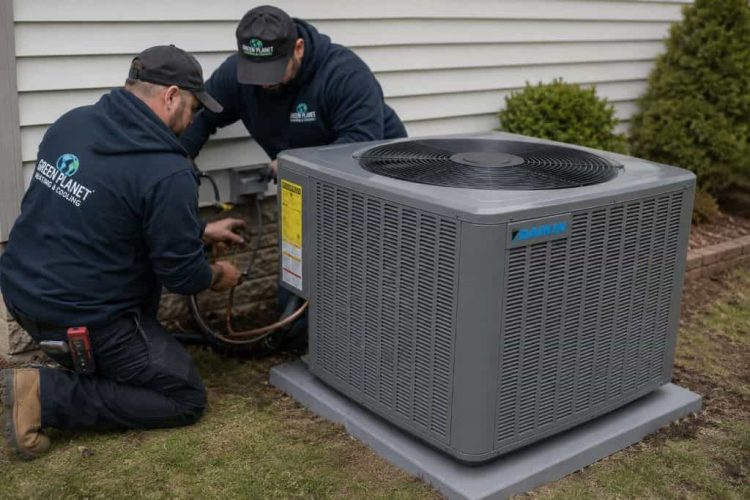
Good HVAC work is quiet, steady, and easy to live with
Most homeowners do not want to think about HVAC very often, and that is reasonable. The best systems disappear into the background. They keep the house comfortable through Pasadena’s long, hot stretches without demanding constant attention. That outcome depends less on marketing language and more on disciplined choices: proper sizing, matched equipment, solid installation, and attention to ducts and charge.
The frustrating part is that many HVAC problems are preventable. Oversizing is avoidable. Poor installation practices are avoidable. Skipping duct issues is avoidable. Yet these are the very shortcuts that create years of discomfort and expense.
If you are comparing options for a Pasadena-area home, the smartest mindset is not “What is the biggest or fanciest system I can buy?” It is “What does this home actually need, and who will install it correctly?” That question leads to better comfort, better efficiency, and fewer emergency calls when the next run of 90-degree days arrives.
And in this climate, where summer puts real stress on cooling equipment, that is not a small detail. It is the difference between owning HVAC equipment and actually getting the comfort you paid for.